
Probate Attorney Services in Broward County, Florida
A probate attorney in Davie, FL, handles court filings, creditor issues, and asset division. They also handle stressful lawsuits.
Formal Probate Administration in Broward County, Florida
This circuit court proceeding manages intestate or testate estates exceeding small estate limits, ensuring proper judicial oversight.
Summary Probate Administration in Broward County, Florida
Summary probate administration simplifies things immensely for smaller estates that fit specific state asset limits.
Ancillary Probate for Out-of-State Assets in Broward County, Florida
Out-of-state residents owning local Florida property need this specific process to transfer real estate properly.
Small Estate Probate Assistance in Broward County, Florida
Small estate probate assistance helps families review assets, documents, estate size, and proper probate options.
Estate Settlement and Asset Distribution in Broward County, Florida
Your lawyer helps personal representatives follow wills and state laws to ensure equal distribution of assets.
Why You Need a Probate Lawyer in Broward County, Florida
A probate lawyer handles court paperwork, creditor notices, estate files, beneficiary questions, and final asset splitting.
When documents vanish, assets get totally confusing, or ugly family arguments flare up, some decent
legal guidance keeps things steadier.
Navigating Broward County Probate Court Requirements
An attorney handles complicated court petitions, formal notices, property inventories, financial accountings, signed orders, and strict deadlines.
Preventing Executor Mistakes in Broward County Estates
A probate attorney guides personal representatives through tricky fiduciary duties, mandatory filings, and required notices.
Handling Creditor Claims and Estate Debts in Broward County, Florida
A probate lawyer reviews stressful debt claims, formal objections, payment priority, and appropriate estate protection options.
Ensuring Proper Asset Distribution Under Florida Law
Fair distribution requires strict compliance with wills, beneficiary rights, confusing homestead laws, and Florida rules.
Probate Process Explained by a Probate Lawyer in Broward County, Florida
A probate avoidance attorney in Broward County helps families open estates, file notices, guide representatives, and distribute assets.
Filing Probate and Opening the Estate in Broward County, Florida
Probate begins with petitions, wills, death certificates, estate details, beneficiaries, and representative information.
Appointment of Personal Representative in Broward County, Florida
The court appoints a personal representative to gather assets, notify parties, and manage duties.
Inventory and Valuation of Estate Assets in Broward County, Florida
Estate assets are identified, listed, and valued to support creditor review, communication, and distribution.
Payment of Debts, Taxes, and Liabilities in Broward County, Florida
A probate lawyer helps review debts, taxes, claims, expenses, and required estate payments.
Final Distribution and Closing the Estate in Broward County, Florida
Remaining assets are distributed after debts, expenses, filings, court orders, and probate rules.
Common Probate Litigation Cases in Broward County, Florida
Probate litigation basically covers nasty fights over wills, representatives, pushy creditors, confused beneficiaries, messy documents, or asset splitting.
Will Contests and Inheritance Disputes in Broward County, Florida
Ugly will contests usually involve mental capacity, sketchy undue influence, straight-up fraud, bad signing, or confusing terms.
Missing or Hidden Assets in Broward County, Florida
Tricky asset disputes focus on weird inventory records, ownership names, actual values, hidden property, and classification headaches.
Creditor Claims Against Estates in Broward County, Florida
Creditor fights mean checking tight deadlines, old records, claim validity, payment orders, and making proper objections.
Family Estate Disputes in Broward County, Florida
Family estate disputes involve completely forgotten heirs, basic beneficiary rights, bad representative behavior, unclear terms, or total mismanagement.
How a Probate Attorney in Broward County,
Florida Can Help
A probate attorney supports representatives, beneficiaries, families,
filings, court requirements, claims, records, disputes, and distributions.
Court Filings and Legal Documentation in Broward County, Florida
Probate attorneys prepare petitions, notices, inventories, accountings, orders, and filings to prevent delays.
Probate Court Representation in Broward County, Florida
Probate court representation addresses hearings, objections, creditor matters, procedural issues, and contested estate concerns.
Resolving Estate Disputes Efficiently in Broward County, Florida
An attorney in South Florida resolve will disputes, omitted heirs, representative conduct, creditor claims, and distributions.
Protecting Executors From Personal Liability in Broward County, Florida
A probate lawyer helps representatives follow fiduciary duties, deadlines, records, and distribution rules.
Responsibilities of an Executor in Broward County, Florida Probate Cases
Under Florida law, a personal representative handles tricky estate duties carefully. These tasks often include:
asset reviews, creditor notices, court filings, beneficiary updates,
and final payouts.
Managing Estate Assets in Broward County, Florida
Representatives have to find, collect, protect, and handle all estate property during probate. Good asset tracking also stops annoying fights among beneficiaries before they even start.
Notifying Creditors and Beneficiaries in Broward County, Florida
Representatives must alert known creditors, beneficiaries, and interested folks during the probate process. They usually need to publish newspaper notices and handle incoming debt claims or questions. A probate lawyer makes sure these annoying notice duties get finished up perfectly.
Filing Required Probate Documents in Broward County, Florida
Personal representatives regularly file petitions, property inventories, financial accountings, notices, and other court paperwork. Good legal support keeps the paperwork moving along on time.
Distributing Assets According to Florida Law in Broward County, Florida
Representatives pass out remaining estate assets following the will, court orders, and state law. This swapping usually happens only after valid debts, bills, and court steps wrap up. A probate lawyer helps prevent silly mistakes during this final, crucial stage.
What Is Probate in Florida?
Probate is the legal process through which a deceased person’s debts are paid, and their remaining assets are distributed to beneficiaries. In Florida, probate is administered through the circuit court in the county where the deceased resided. The Florida Probate Code, found in Chapters 731 through 735 of the Florida Statutes, governs this process.
Florida recognizes two primary forms of probate administration:
Our probate attorney in Broward County evaluates each estate to determine which process applies and guides personal representatives and beneficiaries through every required step.
Formal administration
Formal administration is the standard probate process, required when the estate’s non-exempt assets exceed $75,000 or when the decedent has been deceased for fewer than two years. It involves court supervision, creditor notification periods, and judicial approval of final distributions. This process typically takes six months to a year or longer, depending on estate complexity and whether disputes arise.
Summary administration
Summary administration is a simplified process available for smaller estates (those with non-exempt assets under $75,000) or when the decedent has been deceased for more than two years. It involves fewer court filings and can often be completed in a matter of weeks.
Our probate attorney in Broward County evaluates each estate to determine which process applies and guides personal representatives and beneficiaries through every required step.
Broward County Probate Court
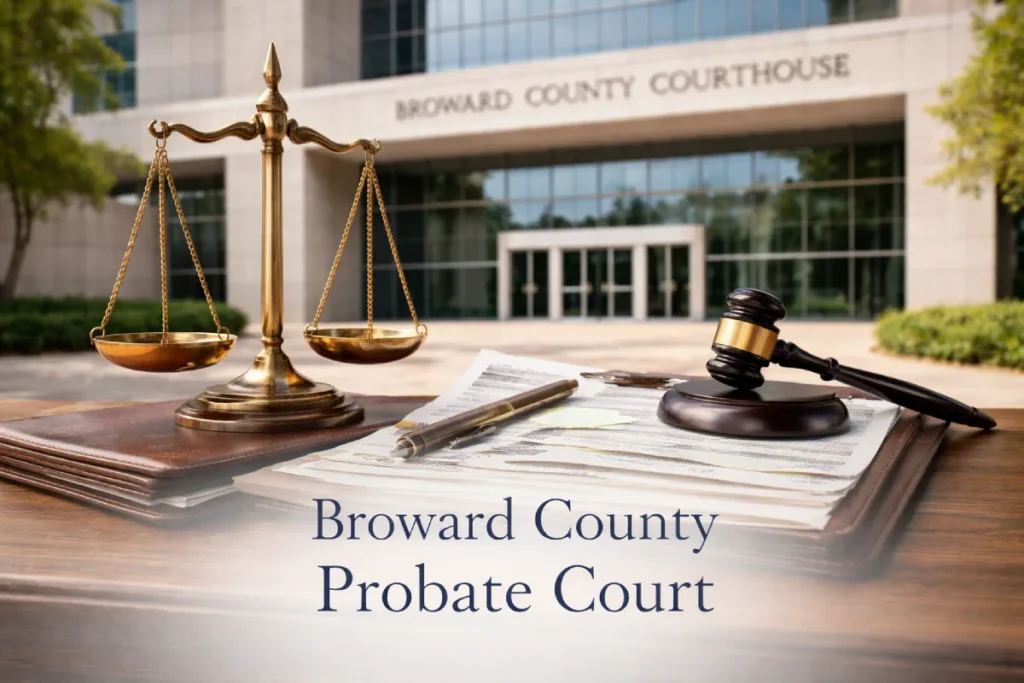
Probate matters in Broward County are handled by the Seventeenth Judicial Circuit Court located in Fort Lauderdale. Familiarity with local court procedures, filing requirements, and judicial expectations is an important practical advantage. Whether you are located in Davie, Fort Lauderdale, Hollywood, or elsewhere in Broward County, our probate lawyer at Peace of Mind Broward serves Davie, FL residents and families throughout the surrounding area and understands how to move cases forward effectively within this specific court system.
The Role of the Personal Representative
Florida courts appoint a personal representative (known in other states as an executor) to manage the probate estate. This individual is responsible for gathering and inventorying assets, notifying creditors, paying valid debts and taxes, filing required court documents, and ultimately distributing assets to beneficiaries.
Florida law requires that most personal representatives be represented by a licensed Florida attorney during formal administration. This requirement exists because the fiduciary duties involved are significant and the procedural requirements are strict. Errors in the probate process can expose personal representatives to personal liability.
Our Broward County probate lawyer works closely with personal representatives to ensure they fulfill their duties correctly and efficiently, from initial court filings through the issuance of the court’s order of discharge.
Probate Litigation and Will Contests
Not all probate proceedings are straightforward. Disputes can arise over the validity of a will, the conduct of a personal representative, the interpretation of ambiguous terms, or the rights of omitted heirs. Florida law provides mechanisms for addressing these disputes within the probate proceeding.
common grounds for will contests in Florida include:
- Lack of testamentary capacity
- Undue influence
- Fraud
- Improper execution
Interested parties generally have a limited window to raise these objections, making prompt legal guidance important when concerns arise. We represent both estates and individual parties in probate disputes, advocating for outcomes that reflect the decedent’s true intentions and protect our clients’ legal rights.
Estate Planning Options for Avoiding Probate
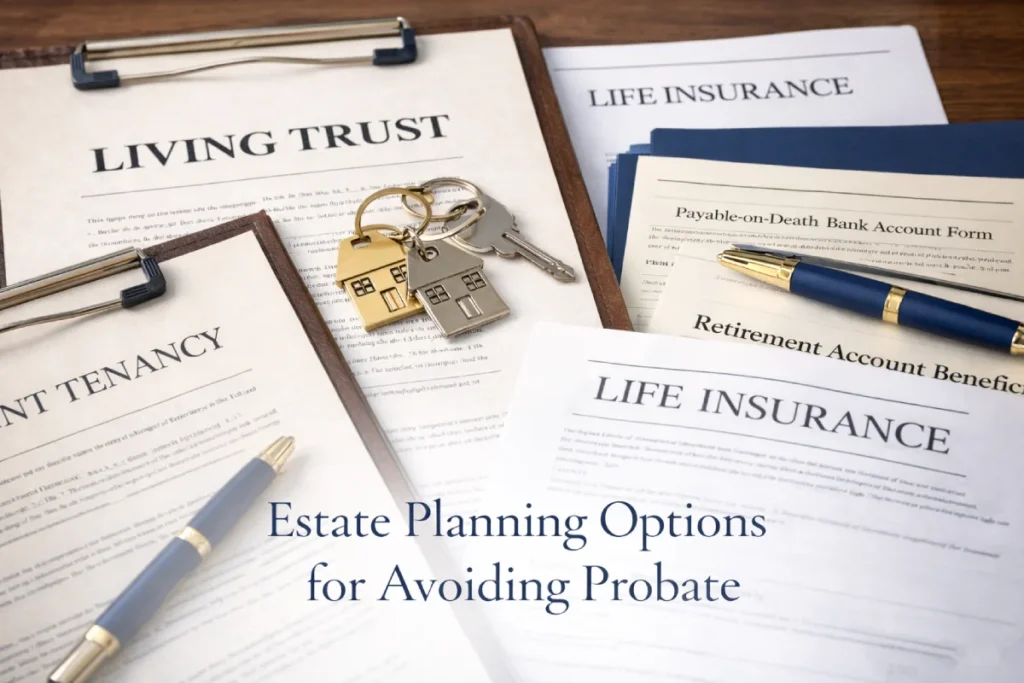
Many families find probate to be a time-consuming and public process. Florida offers several estate planning tools to transfer assets outside of probate entirely, including revocable living trusts, joint ownership with right of survivorship, payable-on-death designations, and beneficiary designations on retirement accounts and life insurance.
Properly coordinated estate planning can significantly reduce or eliminate the assets subject to probate. For families who have already lost a loved one without such planning in place, our probate attorney helps them navigate the process as efficiently as possible.
Why Trust Our Probate Representation?
Florida maintains comprehensive regulations governing funeral home operations through the Florida Department of Financial Services, Division of Funeral, Cemetery, and Consumer Services. These regulations establish licensing requirements, facility standards, record-keeping obligations, and consumer protection rules.
Attorney Madeleine Mannello brings focused estate and probate experience to every client matter. She holds a Martindale-Hubbell AV Preeminent Rating, has been recognized as a “Leader in the Law” by the Florida Association of Women Lawyers, and currently serves on the Board of Directors of the Broward County Bar Association. Her practice is built on personalized attention, local court knowledge, and a commitment to guiding Broward County families through difficult legal processes with clarity and care.
Why Families Trust a Probate Lawyer in Broward County, Florida
Grieving families rely on local probate lawyers when estate management involves: messy court filings, creditor bills, beneficiary questions, executor duties, or sudden lawsuits. A friendly Broward County probate lawyer offers clear answers, organized paperwork, and honest communication from that very first filing straight through final asset distribution. This solid backup helps protect regular folks’ legal rights while keeping the confusing court process entirely focused.
How Long Does Probate Take in Broward County, Florida?
Probate timelines around Broward County mostly depend on estate complexity, court review speeds, weird creditor issues, asset records, document accuracy, and unexpected family fights. Quicker summary administration moves way faster when an estate actually qualifies, while regular formal administration easily takes quite a bit longer. Annoying contested matters, totally missing records, or unclear estate documents easily drag this whole legal process out for months.
Complexity of the Estate in Broward County, Florida
Bigger estates with mixed assets, complicated business interests, or messy records usually take forever to finish up properly.
Court Processing Time in Broward County Probate Cases
Slow court scheduling, tedious judicial reviews, endless checklists, and paperwork backlogs definitely drag things out around.
Disputes Among Beneficiaries in Broward County, Florida
Ugly beneficiary arguments over inheritance cuts, property values, will terms, or representative behavior totally stall probate. These nasty fights require deep legal review before anything moves forward. A skilled litigation lawyer helps sort out these messes within the court system.
Whether a Valid Will Exists in Broward County, Florida
A good, valid will easily clarifies who gets what and who runs the whole show as representative. If a will doesn’t exist, generic Florida default rules decide who inherits your stuff. Arguments over will validity also extend the annoying probate process by months.
Frequently Asked Questions About Probate Attorney Services in Broward County, Florida x
Usually yes, because a will must still be admitted to probate, and formal administration generally requires attorney representation for the personal representative.
Probate in Broward County can take several months or longer depending on estate complexity, creditor periods, court processing, and disputes.
A Broward County probate attorney handles court filings, creditor claims, estate records, beneficiary questions, probate disputes, asset distribution, and legal guidance throughout estate administration.
You may need to hire a probate lawyer in Broward County when there is a will contest, objection, omitted heir issue, dispute over personal representative conduct, creditor claim dispute, or disagreement about asset distribution.
Yes, some probate disputes may be resolved through negotiation, mediation, or agreement between interested parties. Other disputes may still require court review when the issue affects will validity, fiduciary conduct, creditor claims, or beneficiary rights. A probate attorney can explain the best path based on the facts of the case.
If someone dies without a will, probate assets pass under Florida intestate succession laws to legal heirs.
The exact cost of hiring a Broward County probate lawyer varies by estate size, complexity, and disputes, but the law in Florida allows reasonable compensation from estate assets.
When families hire a probate lawyer in Broward County, they receive help with court filings, creditor issues, personal representative duties, beneficiary concerns, and probate disputes. Legal guidance can reduce avoidable delays and help the estate move through the court process more smoothly.
Speak With a Probate Attorney in Broward County, Florida Today
Experienced probate guidance can help families and personal representatives manage estate administration with more clarity. A Broward County probate attorney can assist with court filings, creditor claims, beneficiary questions, probate disputes, personal representative duties, and asset distribution. Careful representation helps reduce avoidable delays and keeps the probate process focused from the first filing through final resolution.
Contact experienced legal support today to discuss your probate case in Broward County and get help with estate administration or probate litigation.