
Estate Planning Services in Davie, FL
Working with our attorney for estate planning in Davie helps families to protect their
wealth, long-term financial interests, and secure their future.
Will Drafting Services in Davie, FL
Our legal team drafts clear wills that explain how your property should pass after death and who should handle important estate responsibilities.
Trust Formation Services in Davie, FL
We create trusts that help manage assets during life, support probate avoidance, protect privacy, and guide how beneficiaries receive property.
Revocable Living Trust Planning in Davie, FL
A revocable living trust lets you control assets, avoid Florida probate, and transfer wealth smoothly to your chosen beneficiaries.
Irrevocable Trust Planning in Davie, FL
Our firm helps clients consider irrevocable trusts for specific asset protection, tax planning, or government benefit planning goals when the structure fits their needs.
Asset Protection Planning in Davie, FL
We help organize estate planning tools that may reduce avoidable risk and support long-term protection for family assets.
Why You Need an Estate Planning Lawyer in Davie, FL
An estate planning attorney in Davie FL helps create legally sound documents that
protect your family and reduce future inheritance disputes.
Avoiding Probate Complications in Davie, FL
Without a plan, Florida intestacy laws decide inheritance. So we help families to protect assets and reduce probate disputes.
Protecting Assets and Beneficiaries in Davie, FL
Our legal plans help protect beneficiaries, organize asset transfers, support privacy, and reduce probate risks for long-term family planning.
Reducing Family Disputes Over Inheritance in Davie, FL
We reduce family disputes over inheritance by establishing very clear terms before any emotional confusion can begin.
Ensuring Legal Compliance Under Florida Law
We prepare estate planning documents with attention to Florida legal requirements so your wishes are clearly documented.
Estate Planning Process in Davie, FL
Our clear legal framework helps you to structure and complete your financial
preparations with professional legal guidance.
Initial Estate Planning Consultation in Davie, FL
You will meet with our skilled lawyer estate planning in Davie to talk about your specific personal goals.
Reviewing Assets and Family Structure in Davie, FL
We review your property, accounts, family structure, and beneficiary designations to make sure the estate plan reflects your wishes.
Drafting Wills and Trust Documents in Davie, FL
Next, we write the formal legal papers that will protect your property and provide for your children after you pass away.
Legal Review and Execution of Documents in Davie, FL
You will review each document before signing it under the rules that apply. Some estate documents may require witnesses, notarization, or other formal steps under Florida law.
Updating and Maintaining Estate Plans in Davie, FL
We help you to review and alter your documents whenever your finances change or when a major new family event occurs.
Common Estate Planning Solutions in Davie, FL
An attorney for estate planning in Davie helps families to choose legal tools that protect
their assets and needs.
How an Estate Planning Attorney in Davie, FL Can Help
A skilled lawyer estate planning in Davie helps individuals to protect their wealth.
Their advice helps families to avoid court disputes and prevents confusion during hard times.
Drafting Customized Estate Documents in Davie, FL
Attorneys draft clear documents to reflect the specific intentions of a property owner accurately.
Ensuring Compliance with Florida Estate Laws in Davie, FL
Strict compliance with current Florida estate laws prevents courts from invalidating a will.
Protecting Assets from Legal Challenges in Davie, FL
A Broward County estate planning attorney can help structure documents to reduce avoidable disputes and support long-term asset protection goals.
Updating Estate Plans as Life Changes Occur in Davie, FL
Individuals must update their plans after marriage, divorce, birth, or major financial changes to keep their wishes legally clear.
Benefits of Estate Planning in Davie, FL
Creating a structured estate plan provides multiple key advantages to safeguard your
family and to protect your wealth over time. These legal strategies give you clearer control over important decisions and help loved ones follow your wishes with less confusion.
Asset Protection for Families in Davie, FL
We create estate planning structures that can help protect family assets, reduce disputes, and support long-term financial goals.
Probate Avoidance for Heirs in Davie, FL
Careful preparation helps your chosen heirs to achieve successful probate avoidance, which saves them from expensive and stressful Florida court battles entirely.
Financial Security for Beneficiaries in Davie, FL
Our legal team helps structure documents that support minor children, surviving spouses, and other beneficiaries according to your wishes.
Clear Distribution of Assets in Davie, FL
We help you to assign specific properties to your loved ones, which eliminates costly confusion and prevents intense family inheritance conflicts completely.
Wills are The Foundation of Your Estate Plan

A will serves as the cornerstone of most estate plans, providing clear instructions about asset distribution after your passing. Our estate planning attorney Davie FL residents trust helps draft wills that specifically name beneficiaries, designate guardians for minor children, and appoint executors to manage the estate administration process. A properly executed will reduces family conflicts, expedites the probate process, and ensures your assets reach the people and causes you care about most.
Florida law has specific requirements for valid wills, including witness signatures and testamentary capacity. We ensure your will meets all legal standards while accurately reflecting your intentions. For families with complex situations, such as blended families, business ownership, or valuable collections, a well-crafted will provides necessary clarity and direction.
Trust Planning for Asset Protection and Privacy
Trusts offer powerful advantages beyond basic wills, including probate avoidance, privacy protection, and enhanced control over asset distribution. As your Broward County estate lawyer, we help determine whether revocable living trusts, irrevocable trusts, or specialized trusts best serve your objectives.
Revocable living trusts allow you to maintain control over assets during your lifetime while ensuring a smooth, private transfer to beneficiaries after death. These trusts avoid the public probate process, saving your family time and money while keeping your financial affairs confidential. You can modify or revoke these trusts as circumstances change, providing valuable flexibility.
Irrevocable trusts serve different purposes, often focusing on asset protection, tax planning, or government benefit preservation. Once established, these trusts generally cannot be modified, but they offer significant advantages for protecting wealth from creditors, reducing estate taxes, and qualifying for Medicaid benefits.
Special purpose trusts address specific needs, such as charitable giving, pet care, or spendthrift protections for beneficiaries who may not manage inheritances wisely. Our team evaluates your situation to recommend trust structures that accomplish your goals while maximizing legal and financial benefits.

Living Wills and Healthcare Directives

Medical emergencies can strike anyone at any age. A living will (also called an advance directive) specifies your preferences for end-of-life medical care when you cannot communicate these wishes yourself. This document addresses critical decisions about life support, resuscitation, pain management, and organ donation, relieving your family of the burden of making these difficult choices without guidance.
Florida’s living will statute provides a framework for expressing your healthcare preferences clearly and legally. Our estate planning attorney in Davie helps you think through these sensitive issues and document your wishes in accordance with state law. This ensures medical professionals and family members understand and honor your values during medical crises.
Protecting Your Interests with Powers of Attorney
Powers of attorney authorize trusted individuals to make decisions on your behalf if you become incapacitated. These essential documents fall into two main categories: financial and healthcare.
A durable financial power of attorney allows your designated agent to manage financial matters, such as paying bills, managing investments, handling real estate transactions, and making other monetary decisions when you cannot do so yourself. Without this document, your family may need to pursue costly and time-consuming guardianship proceedings to handle your affairs.
A healthcare power of attorney (also called a healthcare surrogate designation in Florida) names someone to make medical decisions when you’re unable to do so. This person works with doctors to make treatment choices, select healthcare facilities, and access medical records. This document works alongside your living will, with your healthcare agent making decisions about situations your living will doesn’t specifically address.
Selecting the right agents requires careful consideration. Our Broward County estate lawyer helps you evaluate potential candidates and understand the scope of authority you’re granting. We also discuss naming alternate agents in case your first choice becomes unavailable or unable to serve.

Estate Planning for Special Needs
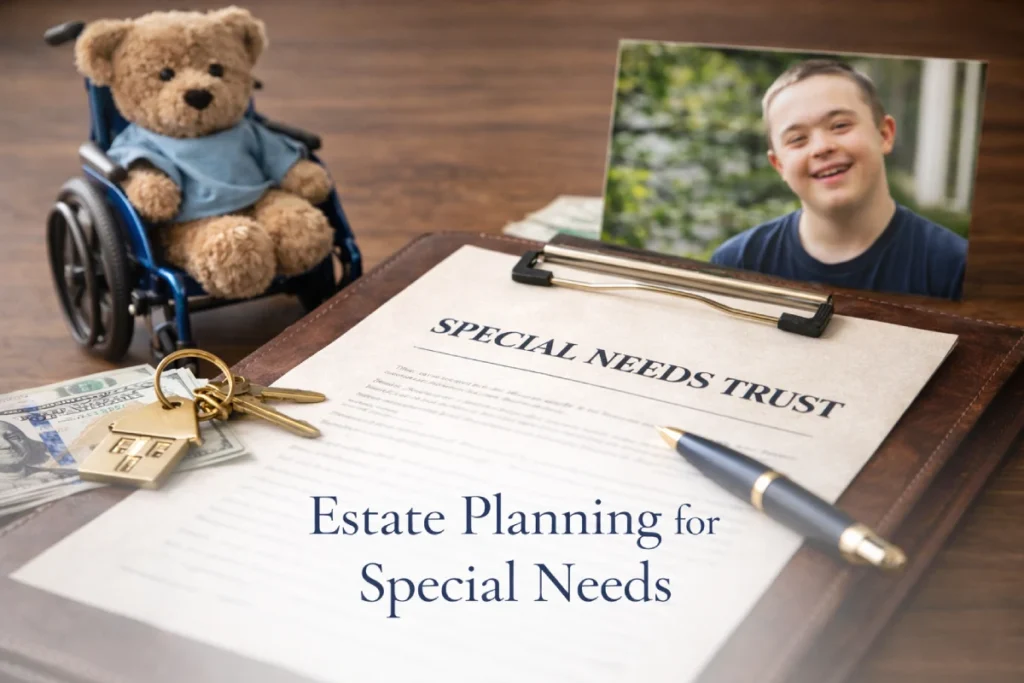
Families with disabled loved ones face unique estate planning challenges. Government benefits like Supplemental Security Income (SSI) and Medicaid have strict asset and income limits. A direct inheritance could disqualify a special needs individual from these crucial programs, creating devastating consequences.
Special needs trusts (also called supplemental needs trusts) solve this problem by holding assets for a disabled beneficiary without affecting benefit eligibility. These trusts can pay for quality-of-life expenses, like education, recreation, therapy, and other items that government programs don’t cover. As your estate planning attorney that Davie families trust, we help design special needs trusts that enhance your loved one’s life while preserving access to essential benefits.
We also address guardianship planning, ensuring appropriate individuals will care for disabled family members after you’re gone. This comprehensive approach provides security for both the special needs individual and the entire family.
Estate Planning for Seniors
As you approach retirement and beyond, your estate planning needs evolve. Our Broward County estate lawyer helps seniors address age-specific concerns, including long-term care planning, Medicaid qualification, and legacy preservation.
Florida’s Medicaid program can help pay for nursing home care, but qualifying requires meeting strict financial criteria. Strategic planning helps preserve family wealth while securing coverage for expensive long-term care. Starting this planning well before care is needed provides the most options and best outcomes.
Seniors also benefit from reviewing beneficiary designations on retirement accounts, life insurance policies, and other assets. These designations transfer outside your will, making regular updates essential. We ensure all estate plan components work together harmoniously.

Regular Reviews and Estate Plan Amendments

Life changes constantly. Marriages, divorces, births, deaths, business ventures, and asset acquisitions all impact your estate plan. Regular reviews ensure your documents remain current and effective. We recommend reviewing your estate plan every three to five years and immediately after major life events.
Florida law also changes periodically, with new statutes potentially affecting estate planning strategies. Our team stays current with legal developments and proactively recommends updates when beneficial. Amendments to wills, trust modifications, and updated powers of attorney keep your plan aligned with current laws and your evolving situation.
Why Estate Planning Benefits Every Adult
You might think estate planning is only for older individuals or wealthy families, but this common misconception leaves many people vulnerable. Young parents need guardianship designations for minor children. Business owners require succession planning. Anyone who becomes incapacitated needs powers of attorney in place beforehand. Without proper planning, courts make these decisions, often not as you would have chosen.
Estate planning also reduces family conflict during difficult times. Clear documentation of your wishes minimizes disputes among heirs and provides your executor or trustee with the authority and guidance needed to fulfill your intentions. This protects family relationships when they matter most.

Why Families Trust Estate Planning Services in Davie, FL
Families planning for the future need clear legal guidance to organize documents, protect loved ones, and prepare for major life changes. An attorney in South Florida who puts clients first can help by explaining options clearly, preparing tailored documents, and updating plans as life changes.
Families choose professional legal support for several important reasons:
- A firm brings decades of local experience when handling estate planning attorney in Davie FL matters directly.
- Every client receives customized estate plans built to fit their specific financial and family needs.
- Clear and transparent communication ensures that individuals understand every step of the legal process.
- The firm maintains a strong focus on long-term asset protection, probate planning, and practical document updates.
- The legal team provides reliable support for updating estate plans as major family changes occur over time.
When You Should Update Your Estate Plan in Davie, FL
Your life changes constantly, and your legal documents must reflect those adjustments to
protect your heirs. Our experienced team helps you to adjust
your documents before minor problems can arise.
Marriage or Divorce in Davie, FL
Marriage or divorce can affect who should inherit assets, serve in trusted roles, or make important decisions on your behalf.
Birth or Adoption of a Child in Davie, FL
Adding a child means you must name a legal guardian to protect their future financial well-being carefully.
Major Financial Changes in Davie, FL
Buying or selling significant assets requires a complete update to keep your current distribution plans accurate.
Relocation or Property Acquisition in Davie, FL
Moving to a new home or acquiring local real estate means everything must be aligned with current laws.
Frequently Asked Questions About Estate Planning in Davie, FL
Yes, an estate planning attorney can help prepare documents that meet Florida legal requirements and reflect your wishes clearly.
A complete plan typically includes a valid last will, a living trust, healthcare directives, and a durable power of attorney.
Estate planning can help avoid probate when assets are placed in a funded revocable living trust and pass directly to beneficiaries.
A will takes effect after death and usually goes through probate. A trust can work during life, avoid probate, and control distributions.
You should review your legal documents every three years or immediately after experiencing a major life event like a marriage.
Yes, estate planning may help protect assets when the right trust, beneficiary choices, and planning tools fit your situation.
Strict Florida intestacy laws will dictate exactly how the local court distributes your property, which frequently creates stressful family arguments.
Experienced lawyers help create customized documents, reduce avoidable probate issues, and give your family clearer instructions for the future.
Speak With an Estate Planning Lawyer in Davie, FL Today
An experienced estate planning attorney in Davie helps families to create a solid asset protection plan. Proper preparation allows individuals to avoid probate complications and bitter legal disputes within Florida courts. This planning process can help make wealth transfer clearer, more organized, and easier for chosen beneficiaries to follow.
Contact experienced estate planning legal support today in Davie, FL, to start building a strong and secure estate plan for your family.