
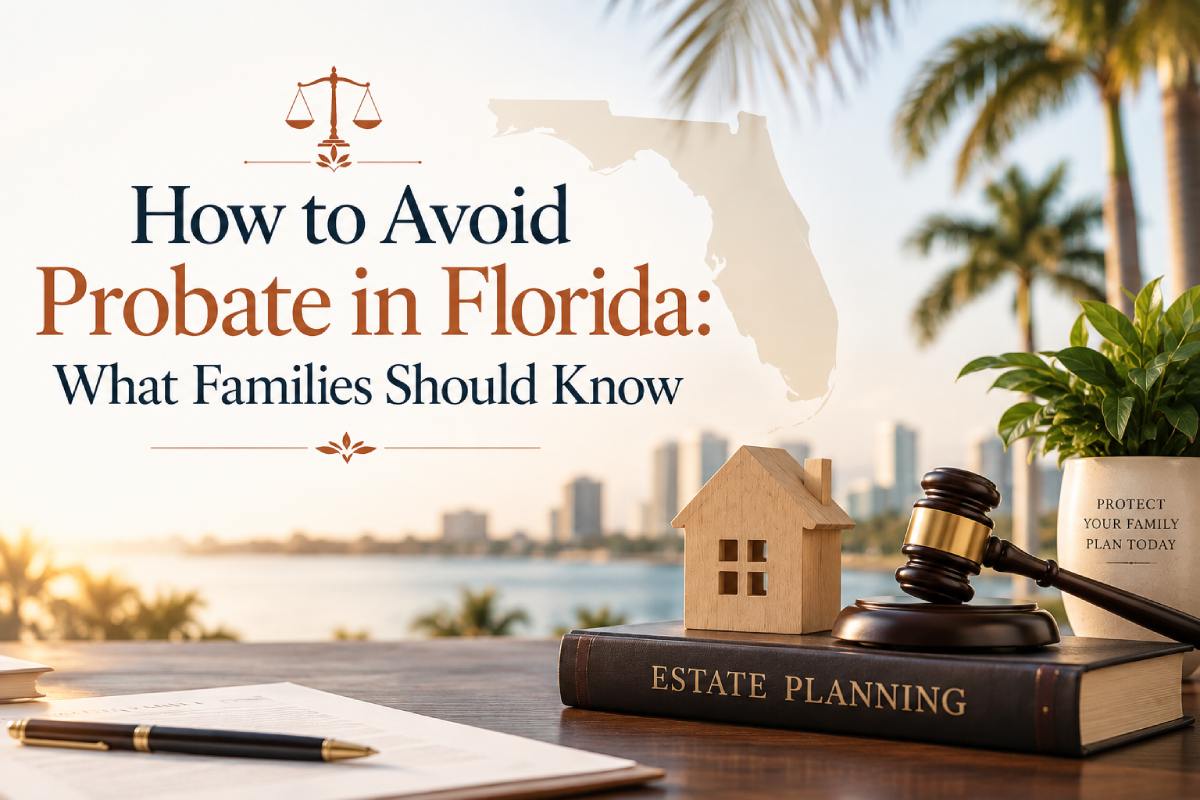
How to Avoid Probate in Florida: Proven Strategies for Families
How to Avoid Probate in Florida: Proven Strategies for Families
Introduction
Why Probate Can Be Challenging for Florida Families
Court-supervised estate administration in Florida can create unexpected delays, public disclosures, and extra expenses during times of grief. Resolving family assets through official court supervision often delays inheritance distribution for many months.
Why Probate Avoidance Matters in Estate Planning
Proactive estate planning helps protect total asset value while preserving family privacy during sensitive transitions. Learning how to avoid probate in Florida allows direct property transfers to chosen heirs without court interference.
Overview of Probate Avoidance Strategies
Effective planning strategies include revocable trusts, named beneficiary designations, and joint property ownership models. Proper legal organization aligns these protective tools with specific family financial goals.
What This Guide Covers
This informational guide explains clear legal options for how to avoid probate when managing Florida real estate, bank accounts, and personal belongings. Families can review practical methods to protect property, reduce administrative stress, and support long-term stability.
What Is Probate in Florida?
How the Florida Probate Process Works
The probate process in Florida is a court-supervised legal procedure that validates a decedent’s will, identifies estate assets, and settles creditor claims. Formal probate administration requires a Florida probate court judge to appoint a personal representative to handle property distribution. This structured judicial pathway protects creditor rights while verifying that asset transfers follow state laws.
How Long Does Probate Take in Florida?
Families are often concerned about how long does probate take in Florida when planning asset transfers. Summary administration for smaller estates may take many weeks or months. Formal administration involving multi-state property or creditor disputes frequently requires up to a year or longer.
How Much Does Probate Cost in Florida?
Determining how much does probate cost in Florida depends on total estate value and overall case complexity. Statutory attorney fees, court filing costs, appraisal fees, and personal representative compensation accumulate quickly during court actions. These required administrative fees reduce the final financial inheritance left for family members.
Is Probate Required for Every Estate in Florida?
Not all asset transfers require formal court intervention following an individual’s demise. State law offers specific legal exemptions based on how property titles are structured.
When Probate Is Generally Required
Probate generally applies to assets held solely in the deceased person’s name without a designated beneficiary. Knowing when probate is required in Florida helps families identify property that cannot transfer without a judge’s approval.
When Probate May Not Be Required
Some assets may pass outside probate when valid beneficiary designations or qualifying shared ownership arrangements are in place. Understanding how to avoid probate after death in Florida often starts with reviewing how each asset is titled and whether a transfer mechanism applies.
Small Estates and Simplified Probate
Florida law allows Summary Administration when non-exempt probate assets do not exceed $75,000 or two years have passed. This expedited legal option reduces administrative delays and filing expenses for qualifying families.
Why Asset Ownership Matters
The legal titling of real estate and financial accounts dictates whether official court filings become necessary. Properly titling property during proactive estate planning prevents unnecessary judicial oversight and delays for heirs.
Proven Ways to Avoid Probate in Florida
Create a Revocable Living Trust
Establishing a valid trust allows individuals to transfer legal ownership of assets during their lifetime. The designated trustee manages these assets without court oversight after the grantor passes away. This structured arrangement is one of the top ways to avoid probate in Florida.
Trust documents clearly state asset management instructions for designated beneficiaries. Proper trust creation prevents administrative confusion during title transfers.
Name Beneficiaries on Eligible Accounts
For people learning how to avoid probate, reviewing beneficiary options on eligible accounts can be an important planning step. Asset owners can submit designation forms directly to financial institutions. After death, properly designated funds may pass directly to named beneficiaries outside probate. These designations may also affect how general instructions in a will apply.
Use Joint Ownership With Rights of Survivorship
Holding property jointly may create transfer rights for surviving owners. For families looking to avoid probate in Florida, certain joint ownership arrangements can be part of a broader estate plan. When one owner passes away, ownership may pass to the surviving co-owner depending on how title is held. This arrangement can help support continuity of ownership.
Consider Florida-Specific Deed Strategies
Florida property laws allow owners to use an enhanced life estate deed, often called a Lady Bird deed. As part of Florida probate avoidance, this type of deed may allow an owner to retain control during life while naming who receives the property at death. Using appropriate real estate deeds can support broader estate planning goals.
Keep Your Estate Plan Updated
Major life developments like marriage, divorce, or birth require prompt document updates. Outdated legal forms can cause unintended distribution errors or administrative disputes among heirs. Learning how to avoid probate in Florida involves reviewing documents regularly with qualified legal counsel.
How a Living Trust Can Help Avoid Probate
How a Revocable Living Trust Works
A revocable living trust functions as a flexible legal entity holding property title during the grantor’s life. The grantor selects a successor trustee to manage asset transfers after death. Grantors retain full legal authority to alter or cancel trust provisions throughout their lifetime. This flexibility allows continuous control over designated property.
How Trust-Owned Assets Avoid Probate
Assets registered under trust ownership pass outside standard judicial distribution channels. Since legal property ownership belongs to the trust entity, probate courts do not manage asset distribution. Understanding this structure reveals how to avoid probate court in Florida during estate administration.
Why Funding the Trust Is Essential
Drafting trust agreements represents only the initial phase of effective estate planning. Property owners must re-title deeds, accounts, and real estate directly into the trust name. Proper funding can help avoid probate in Florida for assets validly transferred into the trust and connect physical real property directly to governing trust instructions.
Other Benefits of a Living Trust
Beyond probate planning, trusts can help families maintain greater privacy by keeping certain records outside probate proceedings. Trusts also establish management instructions if a grantor experiences incapacity. This makes living trusts one of several ways to avoid probate in Florida while supporting continued asset management.
Using Beneficiary Designations to Avoid Probate
What Are Beneficiary Designations?
Beneficiary designations allow account owners to transfer assets directly to designated individuals after death. These legal arrangements bypass administrative court procedures, transferring assets directly to named beneficiaries. Financial institutions process these transfer forms without requiring court approval.
Life Insurance Policies
Life insurance policies direct contract proceeds straight to chosen individuals upon the policyholder’s passing. The issuing insurance provider transfers funds promptly after receiving a verified death certificate. This rapid distribution helps surviving family members cover immediate estate administrative expenses.
Retirement Accounts
Individual retirement accounts and pension plans transfer balances to primary or contingent recipients. These financial form instructions override conflicting distribution terms written in a basic last will.
Payable-on-Death Accounts
Bank accounts with payable-on-death designations transfer monetary balances directly to chosen recipients. Account owners maintain full ownership and access to their financial balances during their lifetime.
Common Beneficiary Designation Mistakes
Understanding how to avoid probate after death in Florida includes reviewing beneficiary forms for potential issues. Naming minor children directly may require court involvement to manage funds until legal adulthood. Failure to update recipient forms after major life changes can create distribution conflicts.
Hence, regularly reviewing beneficiary designations can help keep them aligned with your current estate plan.
Using Joint Ownership to Avoid Probate
How Joint Ownership Works
Joint ownership allows multiple individuals to hold equal legal title to a shared property. When co-owners establish property title with rights of survivorship, legal ownership transfers automatically after the co-owner passes away.
Jointly Owned Real Estate
Real estate owned jointly passes directly to surviving co-owners without court supervision. Spouses frequently use tenancy by the entirety to protect family real estate holdings. Properly drafted deeds prevent property title lapses when an original co-owner passes away.
Joint Bank and Financial Accounts
Joint bank and financial accounts may allow surviving co-owners to continue accessing and managing shared funds after one owner passes away. This can help with routine transactions, such as paying bills or managing account balances. Financial institutions may update account ownership after receiving required documentation, depending on the account terms and ownership structure.
Potential Benefits and Risks
Joint ownership can simplify property transfer, but it may expose shared assets to co-owner creditor claims. When considering how to avoid probate court in Florida, future tax complications and family disagreements may also arise from improperly structured joint titles. Evaluating family circumstances can help determine whether joint ownership supports long-term planning goals.
What Assets Avoid Probate in Florida?
Assets Held in a Living Trust
Property funded into a trust may transfer outside court supervision to beneficiaries. One approach to avoid probate is using a revocable living trust to manage qualifying property. Trustees then follow the trust directions when distributing those assets to the intended beneficiaries.
Jointly Owned Assets
Real estate and accounts co-owned with survivorship rights bypass estate administration. Surviving owners receive full asset titles immediately, classifying these holdings as nonprobate assets.
Life Insurance With Beneficiaries
Life insurance policies pay policy proceeds directly to designated primary recipients. Contract proceeds transfer directly to named heirs without entering administrative probate estate inventories. These contractual death benefits provide immediate liquid funds to help families manage urgent expenses.
Retirement Accounts With Beneficiaries
Retirement accounts move monetary balances straight to designated account beneficiaries. Individual retirement plans and employer pensions transfer funds directly outside formal court proceedings. Account owners can also name contingent beneficiaries to maintain secondary asset protection plans.
Payable-on-Death Accounts
Bank accounts with payable-on-death instructions transfer monetary balances straight to named heirs. Financial institutions execute these transfer forms quickly upon receiving standard proof of death. Properly structuring financial documentation protects assets and simplifies long-term family distribution planning.
What Assets May Still Go Through Probate?
Individually Owned Property
Real estate or vehicle titles held solely under one name may usually enter the probate process in Florida. These solely titled assets can remain subject to court supervision until a judge approves the transfer of ownership.
Bank and Investment Accounts Without Beneficiary Designations
Accounts held solely without beneficiary designations may become probate assets after the owner’s death. Banks hold these funds until the court authorizes an official representative to distribute the money.
Personal Property
Unregistered personal belongings like jewelry, artwork, and furniture lack formal ownership titles or designated transfer documents. High-value collections often require formal valuation during court proceedings to resolve their claims fairly.
Assets Not Properly Transferred to a Trust
Items left outside a trust agreement will not bypass the standard legal administrative framework. Unfunded property requires direct oversight by a local Florida probate court before final distribution.
Why Asset Titling Should Be Reviewed
Regular document reviews help families catch unassigned titles early before unexpected legal delays arise. Proper titling aligns every single holding with the primary estate plan.
Common Mistakes That Can Lead to Probate
Assuming a Will Avoids Probate
A last will gives instructions to the judge, but it does not bypass judicial proceedings. The court must validate the document before asset distribution begins for named heirs.
Creating a Trust but Not Funding It
Signing a trust agreement alone may not affect assets that were never transferred into the trust. Neglecting proper trust funding forces remaining assets through regular court administration processes anyway.
Forgetting to Update Beneficiary Designations
Outdated beneficiary forms can send life insurance funds to an ex-spouse or deceased relative. Unclaimed accounts without living beneficiaries default back to the estate, triggering court proceedings.
Using Joint Ownership Without Understanding the Consequences
Adding co-owners to real estate titles can expose valuable property to third-party creditor claims. Equal co-owners might also dispute future sales without a written co-ownership agreement.
Failing to Update an Estate Plan
Major life events like marriage, birth, or relocation require immediate document revisions. Old documents often fail to reflect current family structures or updated state laws.
Can You Completely Avoid Probate in Florida?
Careful estate planning significantly limits court involvement, though sudden deaths or unassigned assets can still occur. Learning to avoid probate requires balancing long-term privacy goals with specific asset structures.
Why Some Estates May Still Require Probate
Forgotten bank accounts or unresolved creditor claims often force an estate into open judicial review. Creditors must receive proper notification before remaining assets reach named beneficiaries safely.
Avoiding Probate vs. Simplifying Probate
Florida probate avoidance planning may help certain assets transfer privately outside the public probate process. Otherwise, full oversight under Formal Administration becomes necessary to settle complex financial obligations.
When Simplified Probate May Be Available
Smaller estates under seventy-five thousand dollars may qualify for an expedited judicial summary process. This shortened pathway helps families resolve simpler asset transfers with reduced legal costs.
How to Create a Probate-Avoidance Plan
Step 1: Make a Complete Asset Inventory
Gathering financial records, deeds, and personal accounts creates a thorough asset inventory. This detailed list helps families organize property and identify ownership gaps. Identifying these assets early helps avoid unexpected court delays later.
Step 2: Review How Each Asset Is Owned
Checking property titles reveals how ownership transfers after a person passes away. Adding joint owners with survivorship rights allows property transfers without court intervention. Proper title structures allow surviving owners to claim assets directly.
Step 3: Review Beneficiary Designations
Banks and insurance companies allow account holders to name specific beneficiaries directly. Updated forms transfer financial accounts straight to heirs outside of court administration. Account holders should verify these beneficiary choices periodically.
Step 4: Consider a Living Trust
Placing assets into a trust keeps private property separate from court proceedings. A properly funded trust may help support family privacy and simplify asset distribution. Fully funding the trust remains an important part of the planning process.
Step 5: Review Florida Property Planning Options
Florida property planning may include deed strategies that fit the owner’s circumstances and estate planning goals. A suitable property arrangement may provide for ownership transfer at death under its stated legal terms.
Step 6: Coordinate the Entire Estate Plan
Aligning bank accounts, real estate deeds, and trust agreements creates a unified strategy. Matching these legal documents prevents conflicting directions and reduces legal friction later.
Step 7: Review the Plan Regularly
Major life changes like marriages, births, or divorces require updating legal documents. Regular reviews help keep property titles and account designations aligned with current family goals.
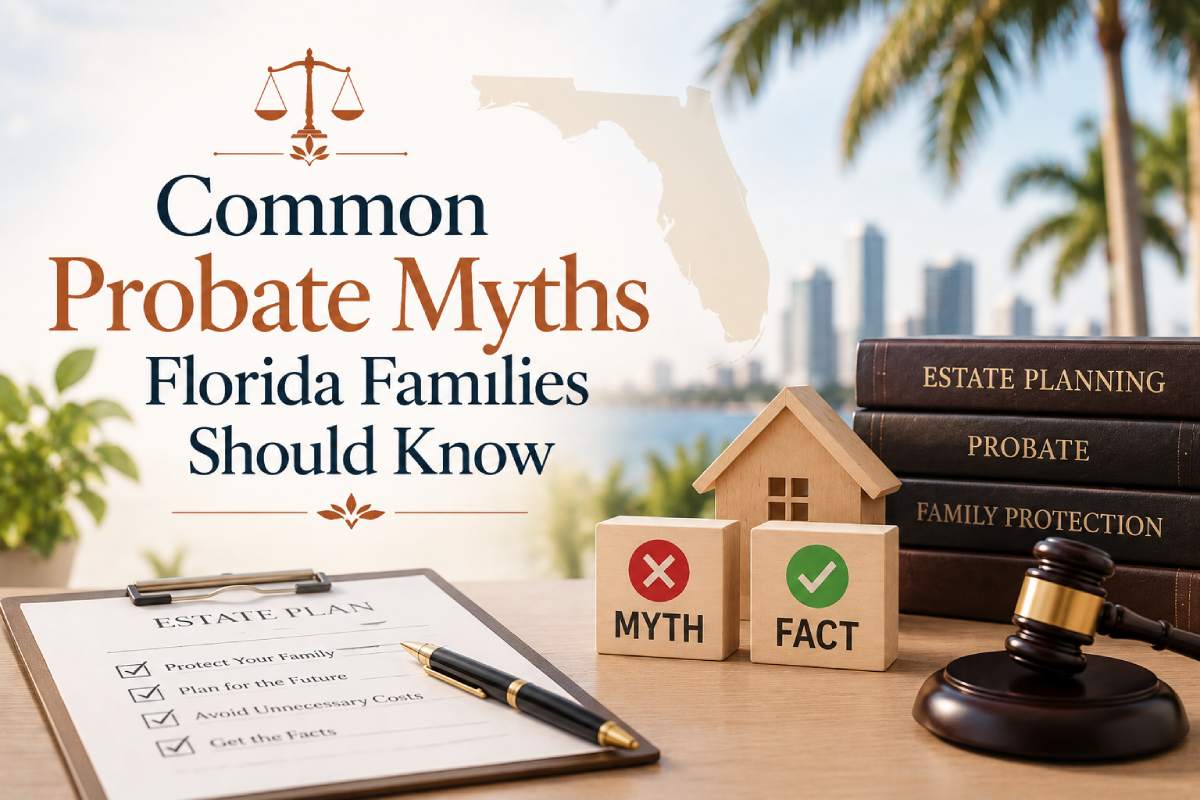
Common Probate Myths Florida Families Should Know
Examining the following common probate myths in Florida helps families make informed decisions.
Myth: Every Estate Must Go Through Probate
Estates with designated beneficiaries or trust assets can bypass court administration. Small estates may also qualify for summary administration procedures.
Myth: A Will Automatically Avoids Probate
Wills actually direct court proceedings rather than bypassing court involvement. A will serves as instructions for the judge during judicial administration.
Myth: Creating a Trust Automatically Avoids Probate
Unfunded trusts fail to bypass court supervision for unassigned assets. Ownership titles must transfer into the trust to keep property out of court.
Myth: Probate Can Always Be Avoided
Solely owned property without designated beneficiaries usually requires court oversight. Unexpected inheritance events can also trigger formal administration proceedings.
Myth: Probate Is Always Expensive and Time-Consuming
Summary administration offers faster resolution for smaller estates under statutory limits. Proper organization significantly reduces overall administrative delays and expenses.
When Should Florida Families Start Probate Planning?
Before Buying or Receiving Significant Assets
Acquiring real estate or financial windfalls increases asset complexity significantly. Establishing title structures early helps keep new property out of court administration.
After Marriage or Divorce
Major relationship changes alter statutory beneficiary rights under state law. Prompt estate plan updates help align property transfers with current wishes.
After Having Children
Growing families require legal structures to designate financial guardians for minors. Directing assets into protected arrangements helps support children during future transitions
After Starting or Selling a Business
Commercial ventures require specific succession instructions to avoid operational disruptions. Proper structural planning shields company shares from lengthy court proceedings.
After Moving to Florida
Relocating requires reviewing out-of-state legal documents against local statutory rules. Florida statutes control local property inheritance and specific homestead protection laws.
Frequently Asked Questions About Avoiding Probate in Florida
How can I avoid probate in Florida?
Consider revocable trusts, joint ownership, and beneficiary designations, and review each asset’s title with a Florida estate planning attorney regularly.
Does a will avoid probate in Florida?
No. A will does not avoid probate; it provides instructions for distributing assets that may still require court-supervised administration after death.
Does a living trust avoid probate in Florida?
A properly funded living trust may allow certain assets to pass outside probate, depending on how those assets are owned.
What assets avoid probate in Florida?
Payable-on-death financial accounts, designated retirement assets, life insurance proceeds, and jointly titled real property pass directly outside court.
How long does probate take in Florida?
It may take several weeks for simpler cases, while more involved cases can take several months or longer depending on circumstances.
How much does probate cost in Florida?
Overall expenses depend on statutory attorney fees, court administrative costs, personal representative compensation, and overall estate asset structural complexity.
Can I avoid probate without a living trust?
Yes. Depending on how your property and accounts are arranged, some may pass to others without requiring a living trust.
Does a house have to go through probate in Florida?
Real estate may require probate unless a valid ownership, trust, or other nonprobate transfer arrangement applies.
Can joint ownership avoid probate in Florida?
Joint tenancy with rights of survivorship allows surviving co-owners to acquire real property titles automatically following an owner’s death.
What happens if someone dies without a will in Florida?
If someone passes away without a will in Florida, state law generally determines who may inherit the estate through the probate process.
Conclusion
Evaluating asset structures can help local families choose legal protections that support smoother asset transfers. A comprehensive consultation can help individuals review personal assets, understand available probate options, and consider a plan suited to their family’s needs.
Schedule a consultation with an experienced Florida estate planning attorney at Peace Of Mind Broward to discuss your assets, probate options, and long-term estate transfer goals.